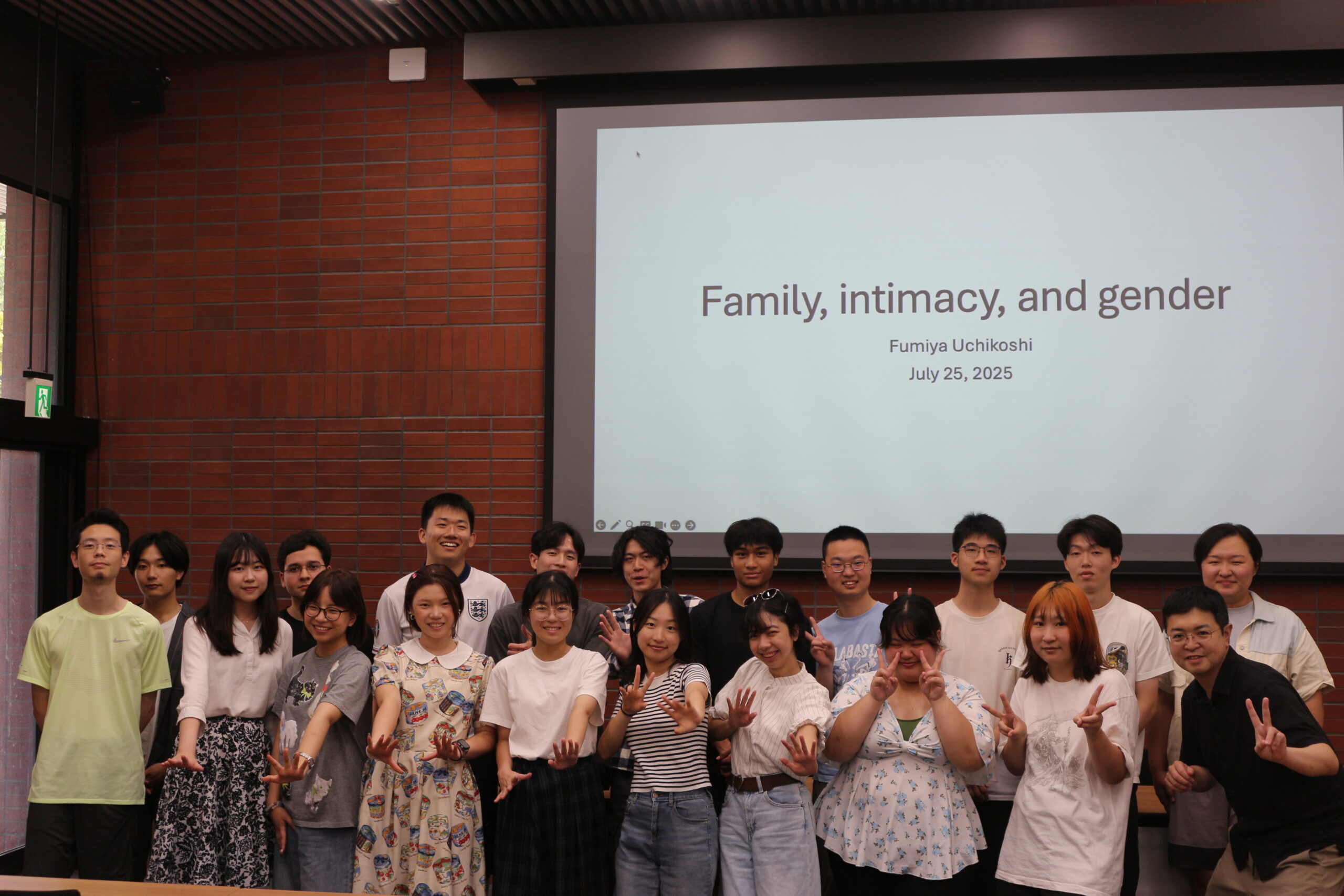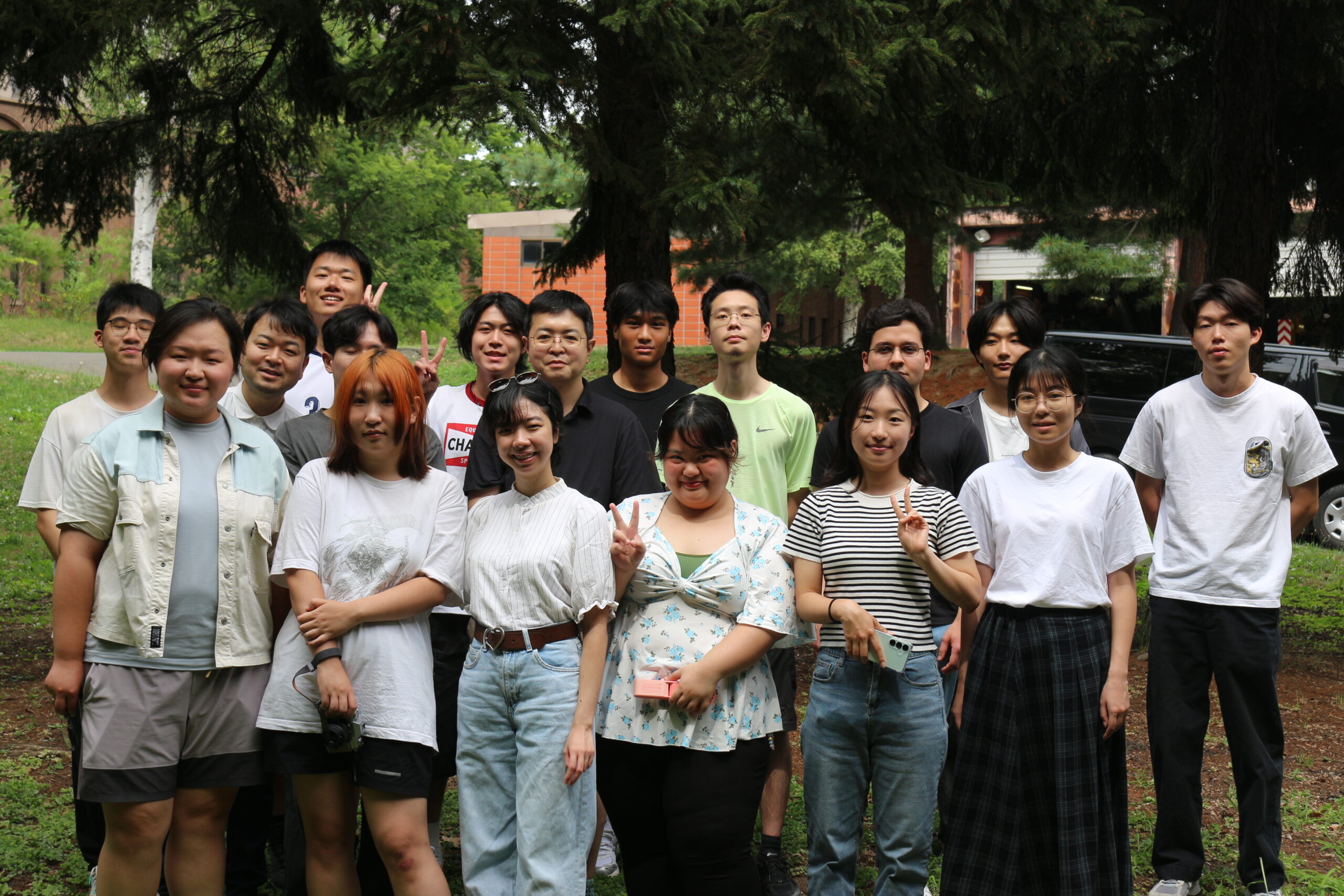



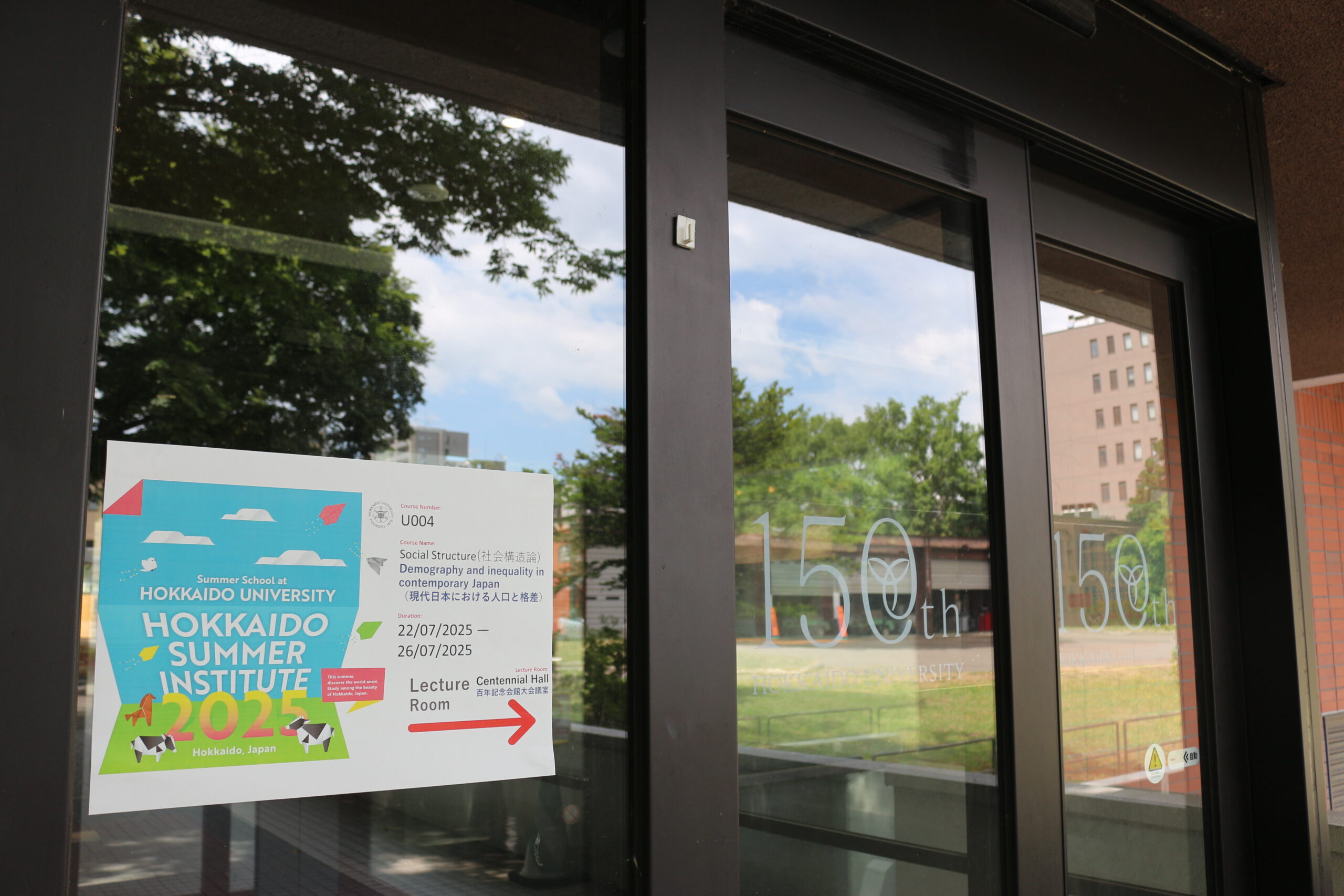
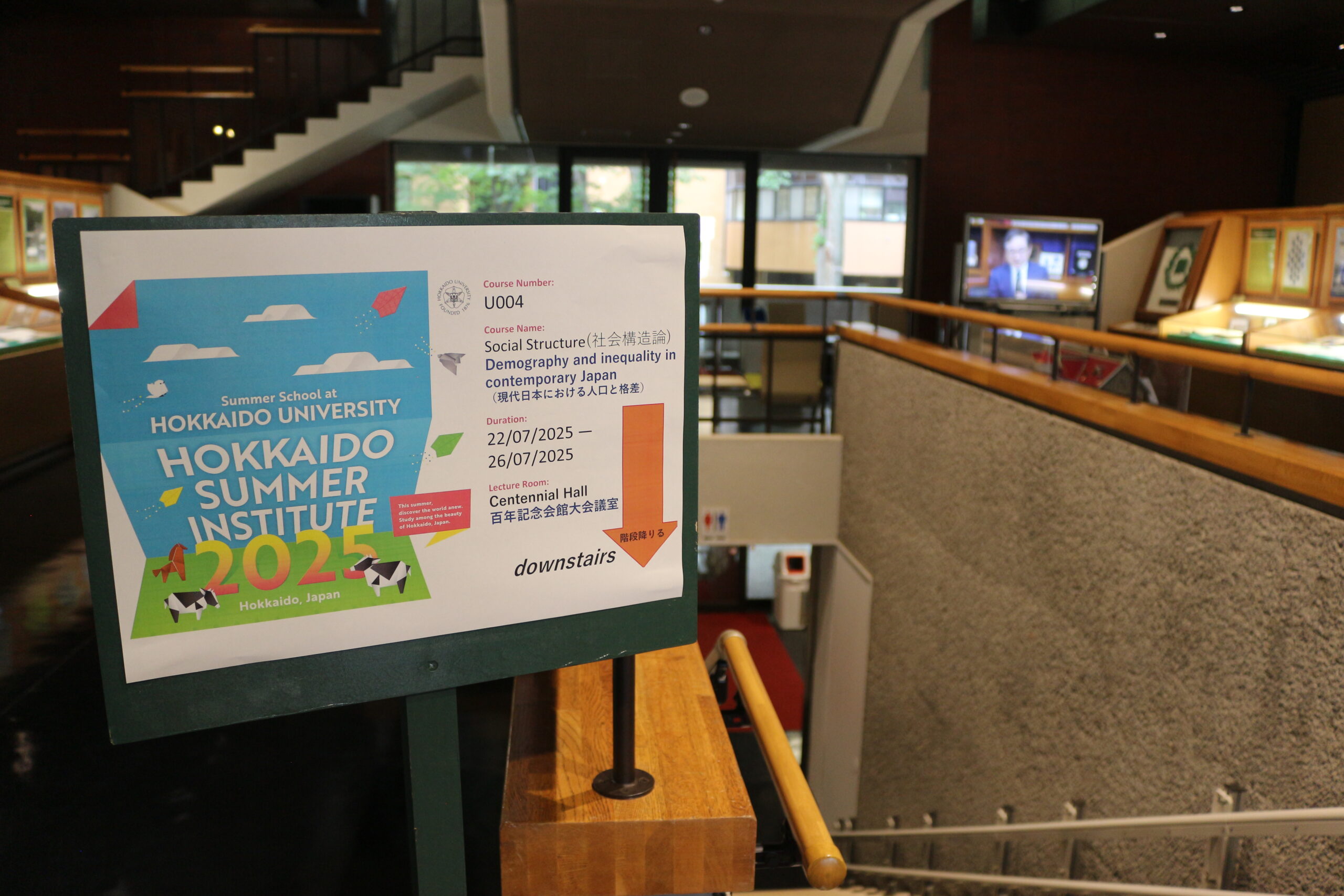
From July 22 to 26, 2025, the Faculty of Humanities and Human Sciences course “Social Structure: Demography and Inequality in Contemporary Japan” was offered as part of the Hokkaido Summer Institute 2025.
This course was conducted in-person, inviting Dr. Fumiya Uchikoshi, an Academy Scholar at the Harvard Academy for International and Area Studies, housed at the Weatherhead Center for International Affairs at Harvard University , as an invited lecturer. It aimed to examine demographic trends and social inequality in contemporary Japan from a sociological perspective through a multifaceted approach. Students deepened their structural understanding through themes such as education, gender, the labor market, and family.
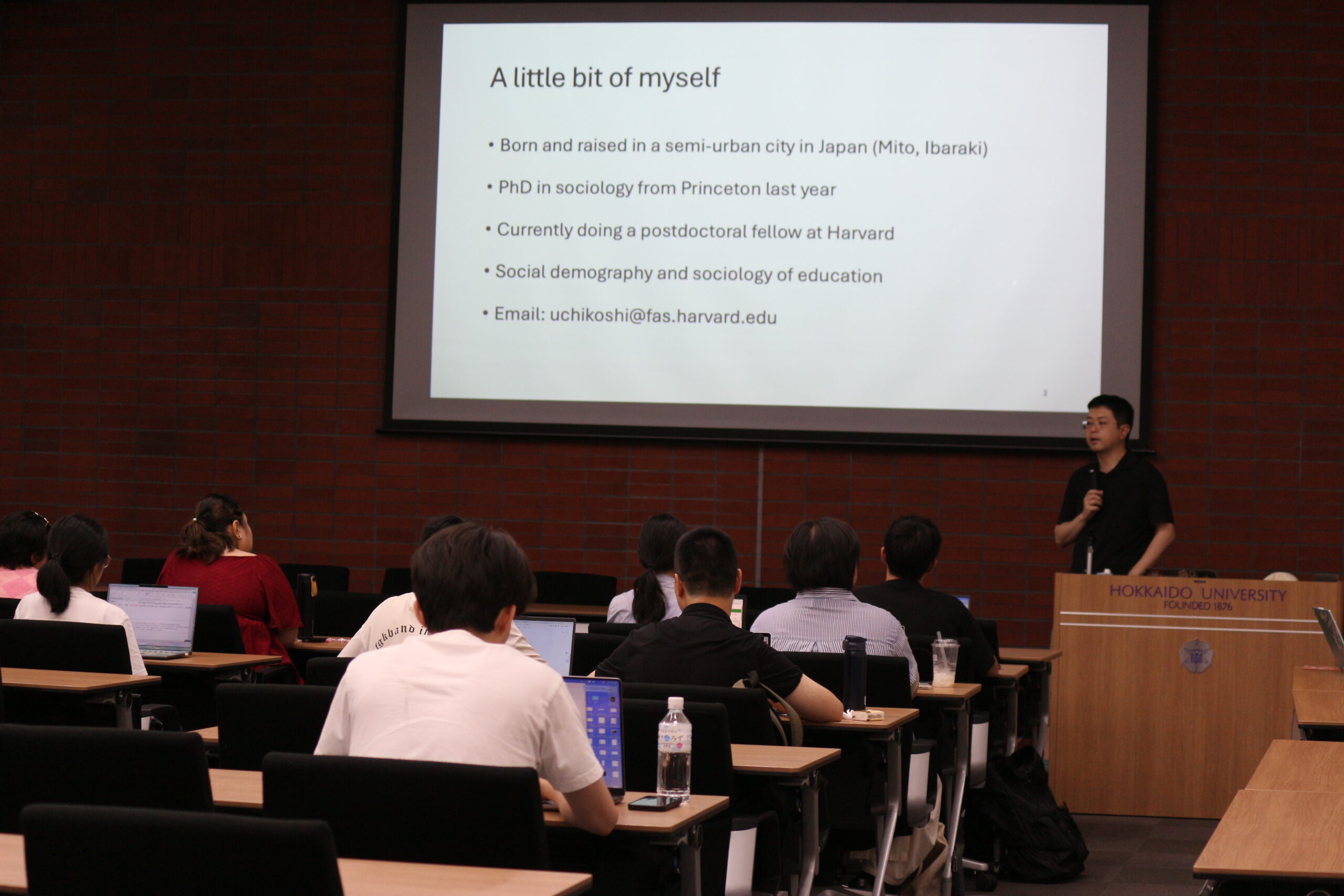
The first lecture began with a brief self-introduction by Dr. Uchikoshi , followed by an overview of the course. Next, each student introduced themselves, stating their name, university affiliation, and field of study. Students then explained why they decided to take the course and what sparked their interest.
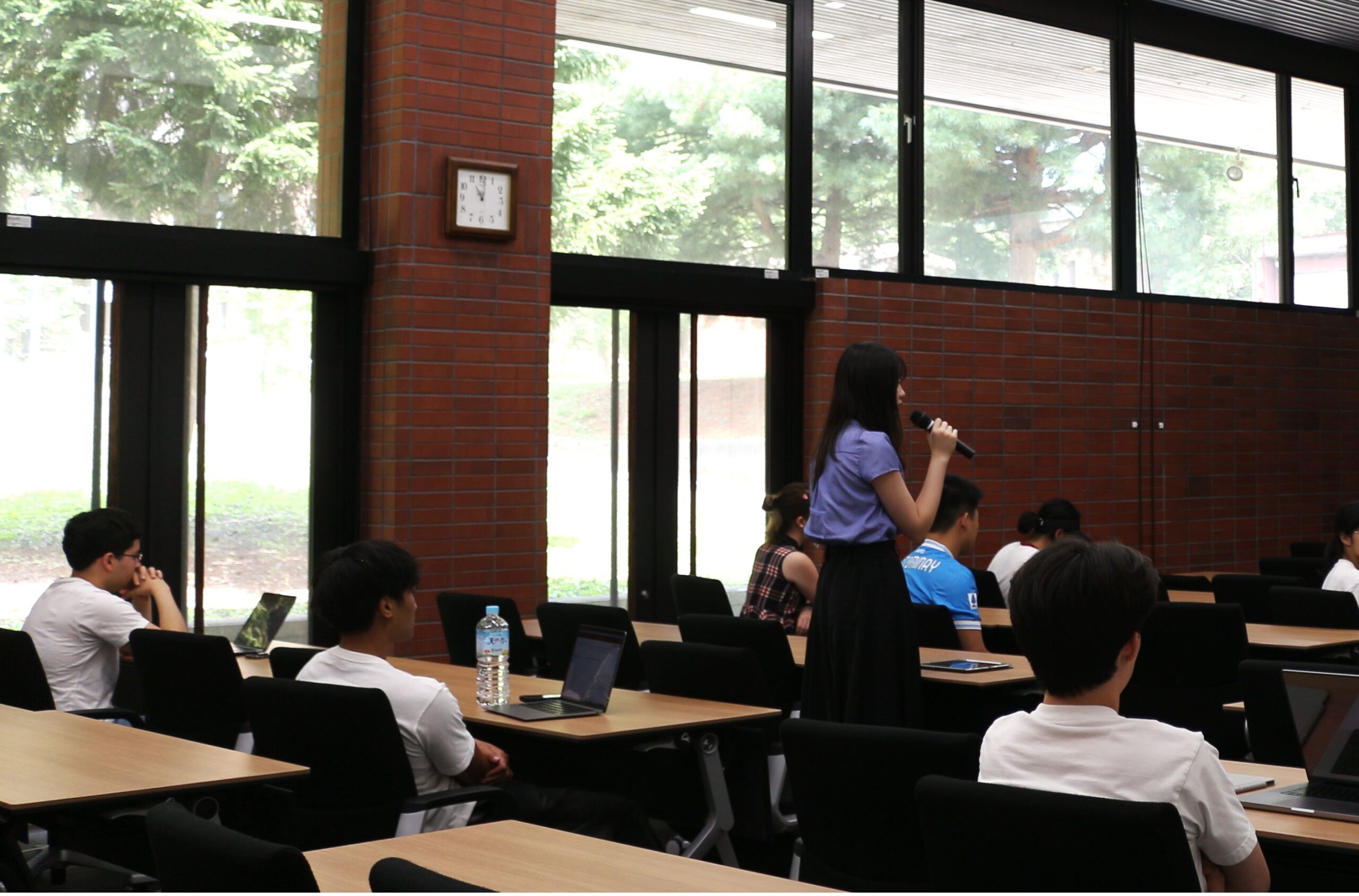
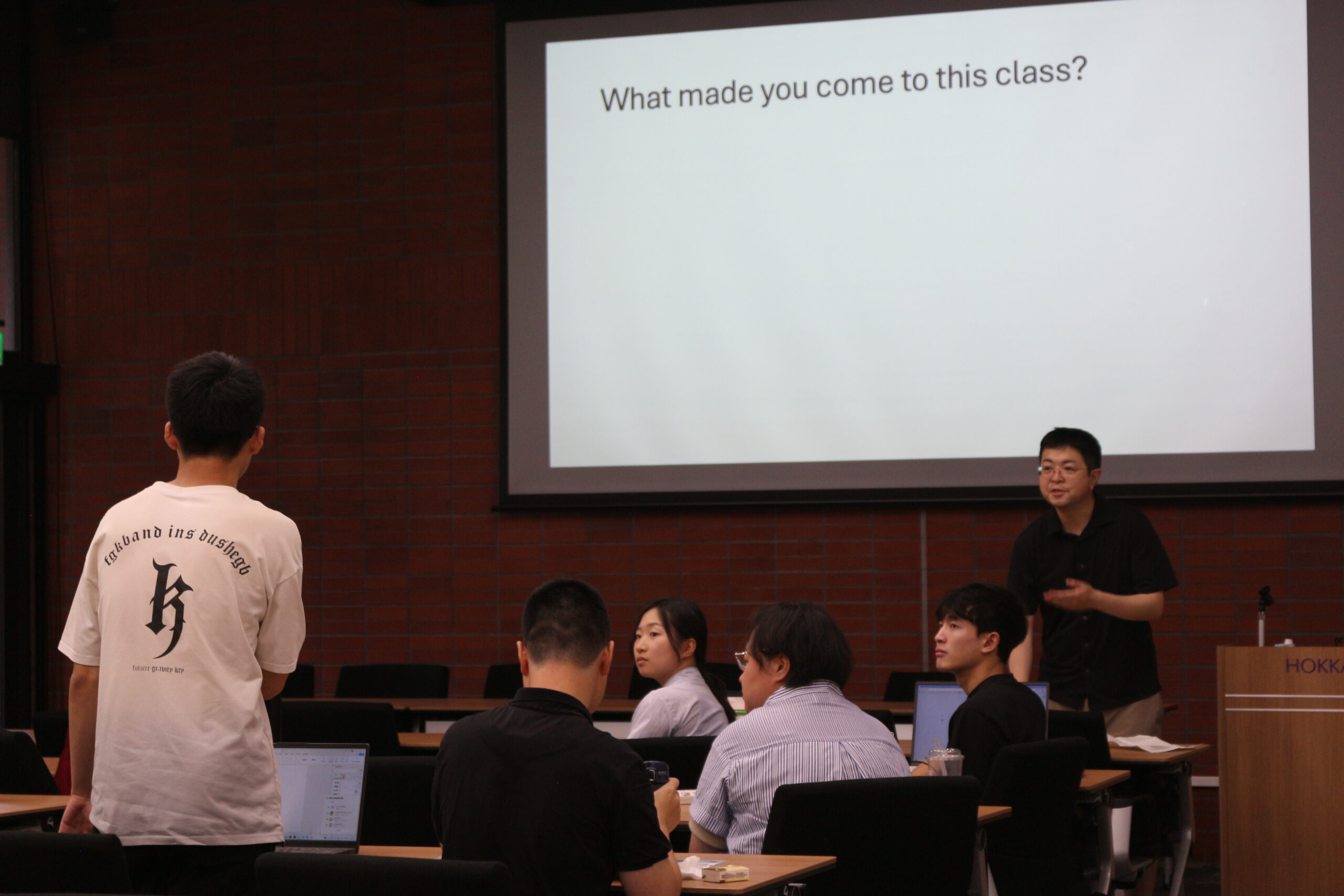
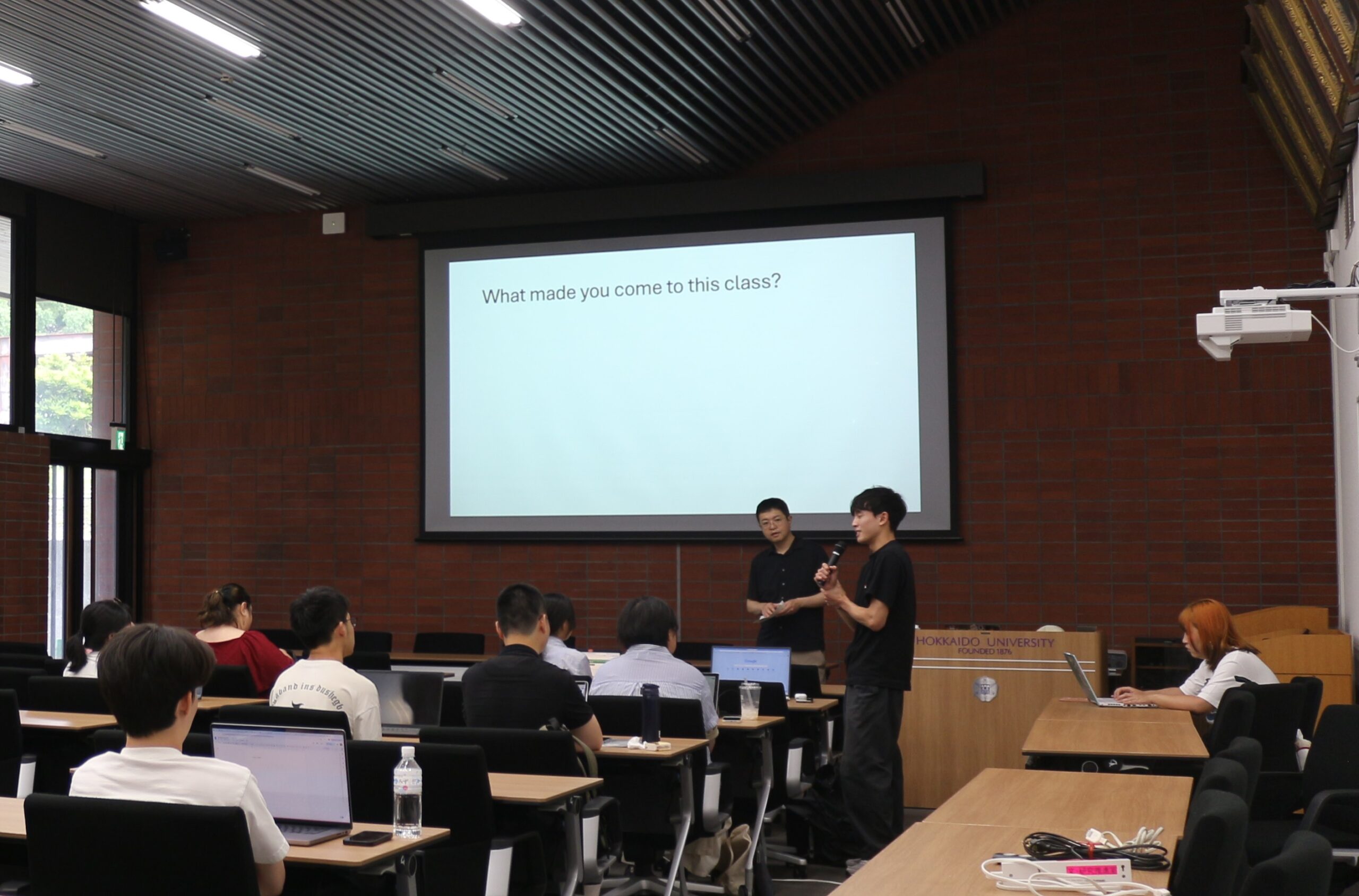
(Students answering why they chose to take this course)
The second session focused on the theme “Japan: The World’s Most Aged Nation.” Using various charts and data, Dr. Uchikoshi explained the current state of “low birth rates and rapid population aging” and “rapid economic growth followed by decline.” He also asked the students questions such as “What could be the causes of this situation?” and “What is the cultural and historical context?” This led to lively discussions between the lecturer and students.
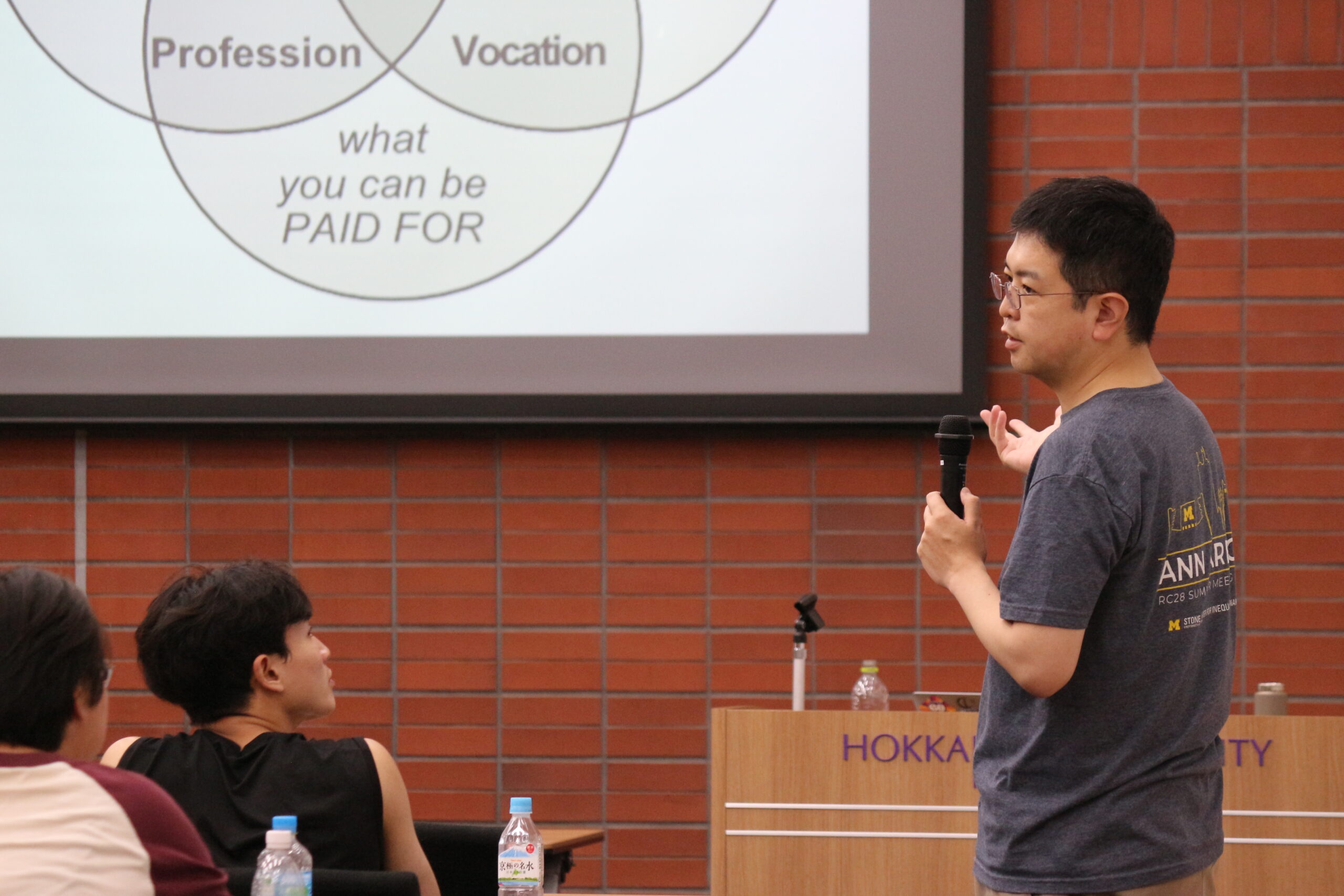
The lectures continued with Dr. Uchikoshi providing explanations using a wide array of images and data, followed by periodic opportunities for students to share their opinions in response to questions.
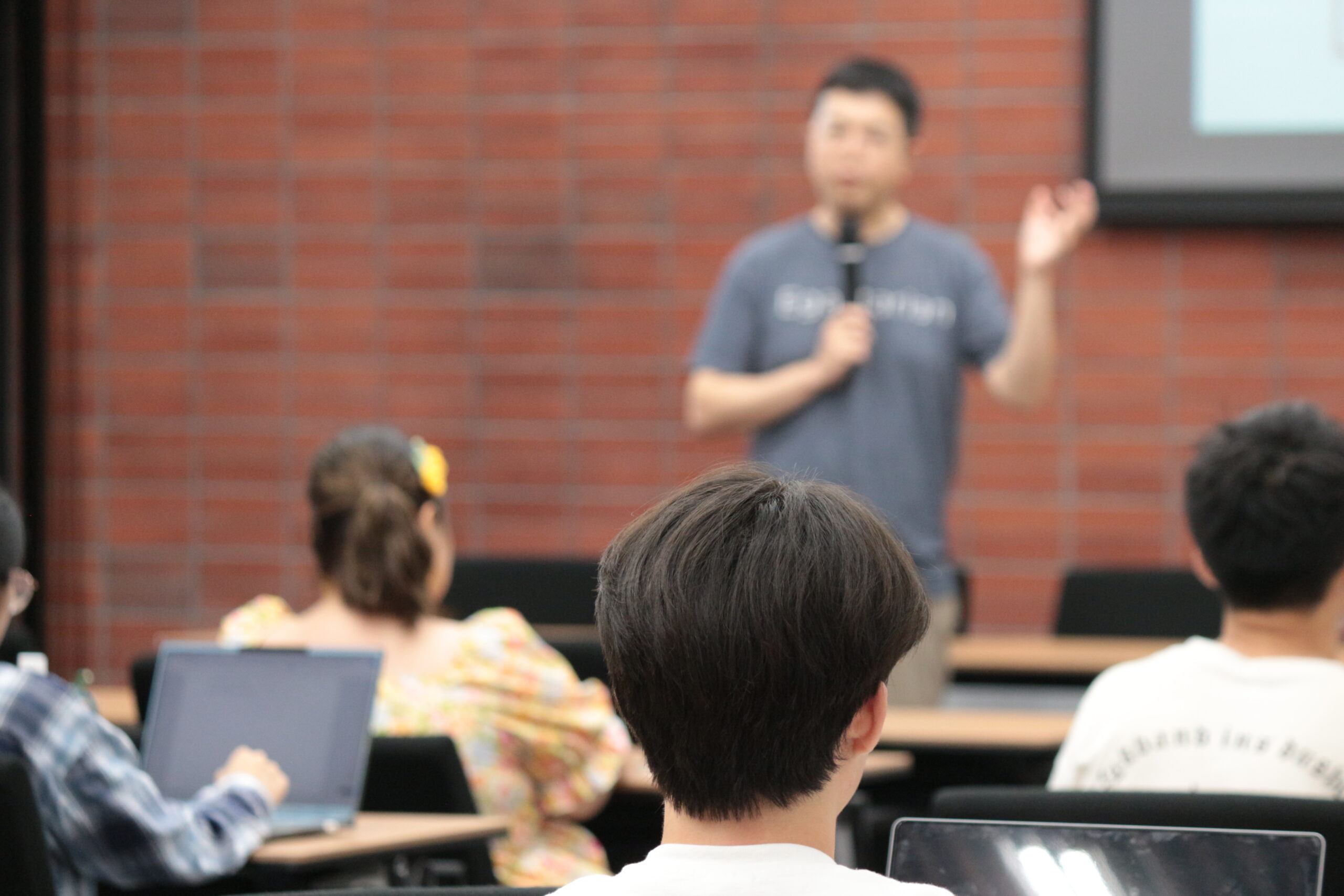
Day two concentrated on employment and labor-management relations, covering the following topics: “Japanese-style Management and the Changing Labor Market,” “Inequality in the Labor Market,” and “Income, Inequality, and Poverty.” Day three focused on education with lectures on “Primary and Secondary Education,” “Higher Education,” and “The Transition from School to Workplace.” Day four addressed intimacy, gender, and intergenerational relations with lectures on “Dating and Marriage,” “Gender and Labor Division in Married Couples,” and “Intergenerational Relations.” The final day featured lectures on “Migration and Regional Population Decline,” followed by student presentations.
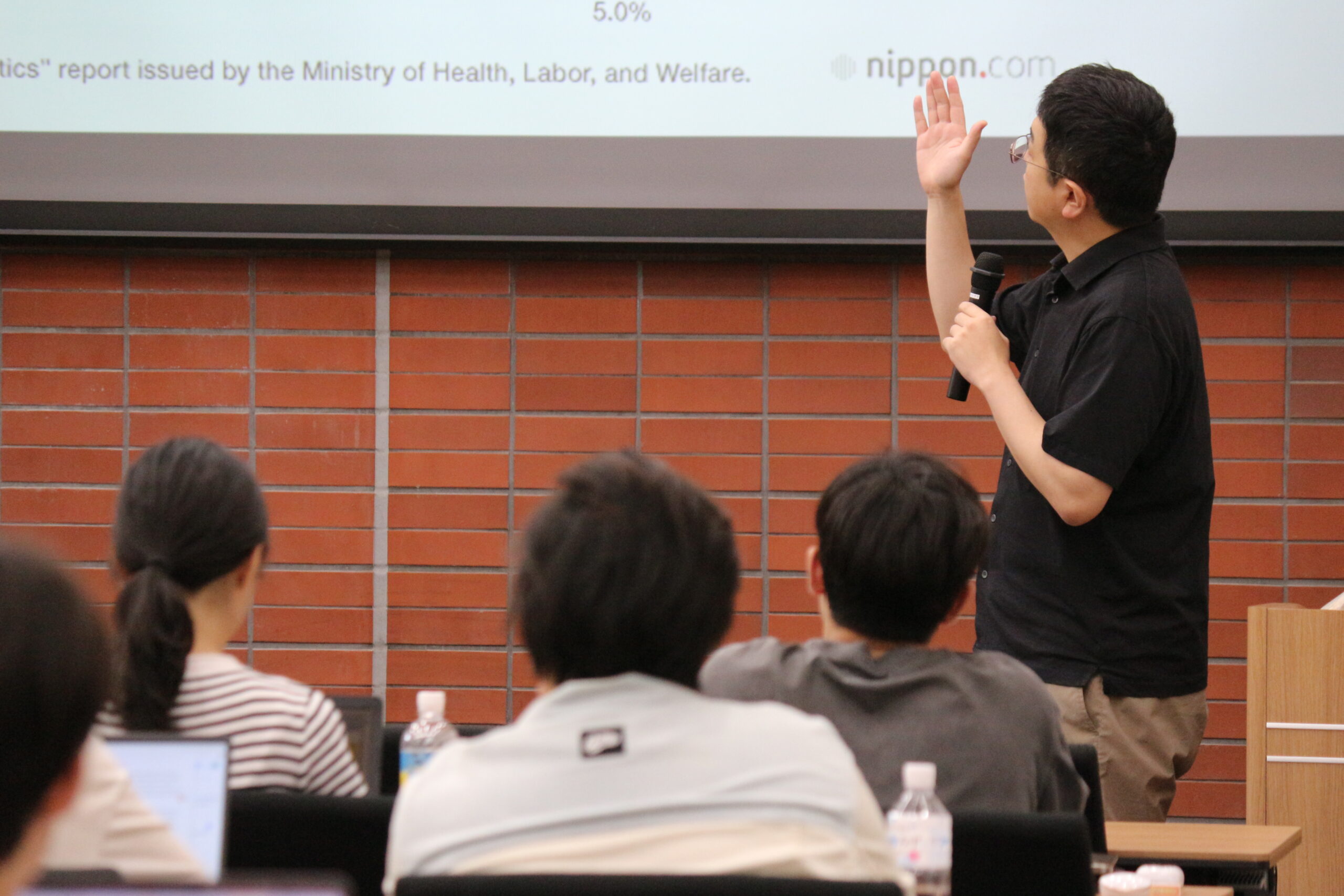
Student presentations covered diverse themes and social issues addressed by each group, including educational disparities, gender inequality, and immigration policy, followed by discussions. Participants commented that they “gained a deep understanding of the structure of Japanese society” and found “comparisons with other countries fascinating,” indicating it was a highly enriching learning experience.
Through lectures, discussions, group work, and the writing of a final report, this course aims to enhance critical thinking skills for discerning what is essential and what is not, as well as social analysis abilities. As a valuable opportunity to view Japanese society from an international perspective, it is scheduled to be offered again next academic year.