



Profile
- Research Subject
My research focuses on imperial governance under the Roman emperors, with particular attention to the relationship between imperial power and the cities of Italy
- Research Fields
- Ancient History of the Mediterranean World, History of Ancient Rome
- Faculty - Division / Research Group / Laboratory
- Division of Humanities / Research Group of History / Laboratory of Occidental History
- Graduate School - Division / Department / Laboratory
- Division of Humanities / Department of History / Laboratory of Occidental History
- School - Course / Laboratory
- Division of Humanities and Human Sciences / Course of History and Anthropology / Laboratory of Occidental History
Lab.letters
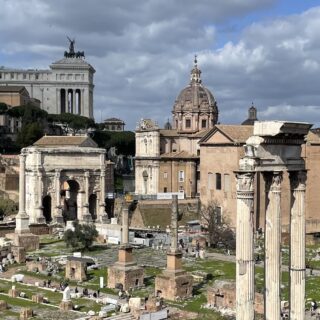

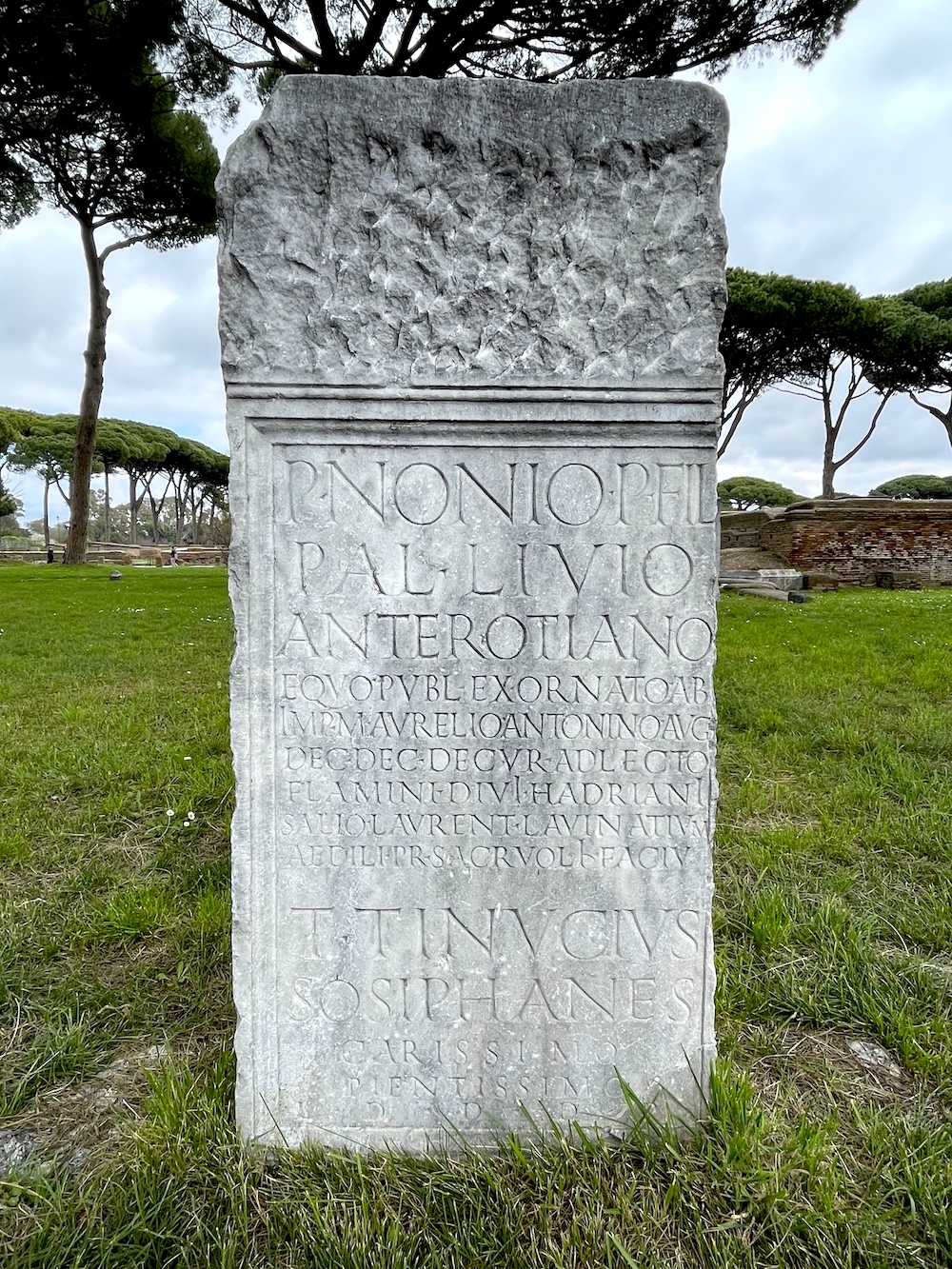
An ancient Roman version of child welfare allowance
engraved on a 2nd-century tabula
Emperors in the ancient Roman Empire established what we would now call a children’s relief fund in Italian cities. This system, called the alimenta program, lent capital to landowners and distributed the resulting interest income for the young boys and girls of the cities. At that time, the concept of altruistic welfare for the nation did not yet exist, so it is necessary to explore the purpose for which the emperor implemented the alimenta program and the significance it held for the citizens of provincial cities. The Tabula Alimentaria, which records borrowers and amounts, also remains, providing clues for deciphering the actual operation of the program. The joy of unearthing new historical facts buried within historical materials, and having my own assumptions shattered, is what propels me forward to the next research endeavor.
Imbuing history students with the strengths of
literacy for discerning truth from falsehood and the ability to understand others
The Laboratory of Occidental History at Hokkaido University is characterized by its comprehensive guidance provided by a large number of faculty members. It also provides robust support for study abroad opportunities and for publishing doctoral theses as books, helping to open doors for your career. History is a discipline that encompasses a wide range of interests, from Latin and other languages to political science, economics, sociology, and more. What I want you to develop through such diverse learning experiences is the literacy to discern true from false information. Furthermore, by considering human activities through the lens of history, which possesses a timeline and scale that is different from what we are used to in everyday life, we deepen our understanding of others with diverse backgrounds. And my own goal is to guide history students in a way that ensures a literacy for navigating the modern world and an understanding of others becomes their strength.
Message
With the guidance of my mentor, I am researching ancient Roman history using Latin inscriptions as my primary historical source. The Laboratory of Occidental History at Hokkaido University houses the vast historical materials of the Latin inscription collection (Corpus Inscriptionum Latinarum), along with other fundamental historical materials concerning inscriptions. The Hokkaido University Library also houses a wide range of historical materials and research literature on ancient Western history, along with extensive collections in related fields such as literature, philosophy, and law. Furthermore, field research is crucial even for document-based historical studies, and since the Hokkaido University study abroad programs are now more fully developed than when I was a student, it should be possible to secure research opportunities when participating in such programs.
Regarding graduate school, I believe one of the strengths of the Hokkaido University Graduate School of Humanities and Human Sciences is that it provides an environment where students can conduct research at their own pace. So if you find yourself wanting to study a bit longer after working on your thesis, you may want to consider applying to graduate school.